chevron_left
-
 play_arrow
JetSetFM We Make You Move
-
 play_arrow
The Electric Sky Mixx Part 1 Jena Red
-
 play_arrow
Dance Baby, Dance!! supa DJ Peter Parker
-
 play_arrow
JetSetFM ThrowBack Mix 280 - supa DJ Peter Parker supa DJ Peter Parker



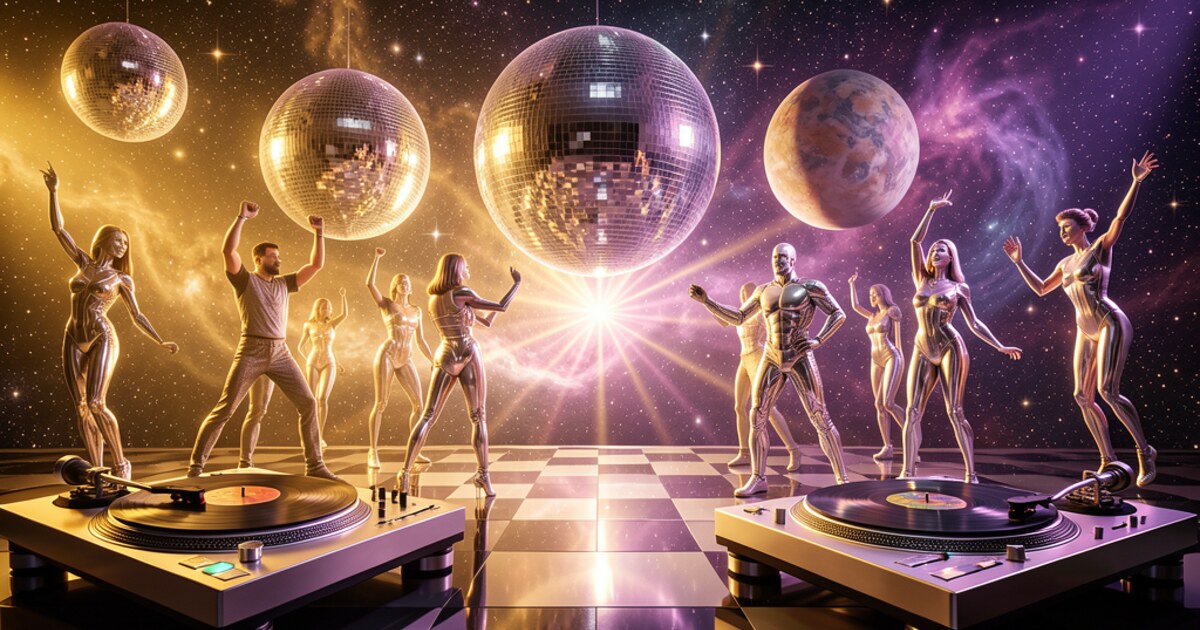
The Rise of Cosmic Disco
AD
AD
The Rise of Cosmic Disco
What if the glitz and glam of disco met the vast, enigmatic expanse of the cosmos? Imagine a sound that transcends earthly dancefloors, propelling you into a galaxy of pulsating rhythms and shimmering synthesizers. This isn’t merely a flight of fancy; it’s the very essence of Cosmic Disco – a fascinating subgenre that carved its own celestial path through the late 70s and early 80s, and continues to resonate today. More than just a fleeting trend, Cosmic Disco represents a pivotal moment in music history, blending the infectious groove of traditional disco with experimental electronic textures, global influences, and an otherworldly ambition. For music enthusiasts, DJs seeking forgotten gems, or anyone captivated by the evolution of electronic music, understanding Cosmic Disco offers a unique window into a period of radical sonic innovation and cultural escapism. It’s a testament to creativity, showing how artists pushed boundaries and defined a sound that transcended its era, leaving an indelible mark on subsequent electronic genres. In this deep dive, we will journey through the constellation of Cosmic Disco, exploring its mysterious origins in Italian clubs, dissecting its signature hypnotic beats and expansive soundscapes, and celebrating the visionary DJs and producers who pioneered its distinct aesthetic. Join us as we trace its cosmic trajectory, uncover its enduring legacy, and understand why this interstellar groove continues to captivate hearts and minds across generations.
Journey into the Stars: Unveiling Cosmic Disco
In this section, we embark on an exhilarating journey through the cosmos of sound, where we will definitively unveil the captivating music genre known as Cosmic Disco. We’ll delve into its fascinating origins, exploring how the vibrant energy of traditional disco transcended earthly dancefloors to embrace an ethereal, space-age evolution. Our exploration will meticulously define the genre, unraveling its unique allure and the distinct blend of intergalactic soundscapes and hypnotic disco rhythms that continue to resonate with listeners today. Finally, we’ll lay out a clear roadmap for the rest of this comprehensive article, highlighting the crucial insights you can expect to gain.Disco’s Space-Age Evolution: From Earthly Grooves to Celestial Rhythms
 The late 1970s and early 1980s marked a pivotal era not just for music, but for human ambition and technological advancement. As the echoes of the Apollo missions still lingered and the promise of a digital future loomed large, a profound shift began to occur within the exuberant world of disco. Initially characterized by its opulent orchestrations, driving four-on-the-floor beats, and soulful vocals, disco started looking upwards, drawing inspiration from science fiction, astronomy, and the burgeoning capabilities of electronic instruments.This period witnessed a remarkable convergence of cultural and technological factors. The public fascination with space exploration, fueled by blockbuster films like Star Wars (1977) and Close Encounters of the Third Kind (1977), infused popular culture with futuristic aesthetics and narratives. Simultaneously, the rapid evolution of synthesizers – such as the Moog Minimoog, ARP Odyssey, and later, the Roland Jupiter-8 – provided producers with an unprecedented palette of sounds. These instruments allowed for the creation of otherworldly pads, shimmering arpeggios, laser-like effects, and deep, pulsating basslines that simply couldn’t be achieved with traditional acoustic instrumentation. Artists and producers began to experiment, layering these synthetic textures over disco’s established rhythmic backbone, thus forging a sound that was both familiar and exhilaratingly new. Early pioneers like Giorgio Moroder with his iconic work on Donna Summer’s “I Feel Love” (1977), and artists such as Cerrone and Space, were instrumental in propelling disco into this cosmic dimension, demonstrating how electronic minimalism could create maximal impact and evoke vast, starry expanses.
The Technological Frontier: Synthesizers and Studio Innovation
The birth of Cosmic Disco was inextricably linked to the technological revolution occurring in music studios. No longer bound by the limitations of string sections and horn arrangements, producers embraced the synthesizer as the ultimate tool for sonic exploration. These machines weren’t just instruments; they were gateways to new dimensions of sound. The ability to sculpt unique waveforms, apply intricate modulation, and create vast, atmospheric soundscapes became central to the genre’s identity. Furthermore, advancements in multi-tracking and effects units, like digital delays and reverbs, allowed for the creation of spacious, expansive mixes that truly captured the feeling of soaring through the cosmos. The studio itself became a spaceship, and the producer its captain, navigating through galaxies of sound.Defining Cosmic Disco: A Symphony of Stars and Grooves
At its core, Cosmic Disco is more than just disco with space effects; it’s a distinct genre that marries the undeniable danceability of disco with the expansive, often psychedelic soundscapes of electronic music, ambient textures, and a strong sense of futurism. It’s a journey music, designed to transport the listener to an otherworldly realm while keeping their feet firmly on the dancefloor. Its allure lies in its ability to be simultaneously nostalgic and forward-thinking, grounded in classic groove but soaring into uncharted sonic territory.Core Characteristics and Sonic Signature
The sonic signature of Cosmic Disco is immediately recognizable:- Hypnotic Rhythms: While maintaining the four-on-the-floor beat of traditional disco, Cosmic Disco often employs more intricate percussion, syncopated hi-hats, and subtle polyrhythms, creating a trance-inducing groove. Drum machines, particularly the Roland CR-78 and later the LinnDrum, played an increasingly important role, offering precise and often more robotic rhythms.
- Expansive Synthesizers: This is arguably the genre’s defining feature. Shimmering pads, ethereal arpeggios, deep analog basslines, and innovative lead melodies created using synthesizers are paramount. The use of vocoders, notably popularized by artists like Kraftwerk (who, while not strictly disco, heavily influenced the electronic aesthetic) and later integrated by Cosmic Disco acts, lent a robotic, futuristic vocal quality.
- Atmospheric Textures: Liberal use of reverb, delay, and flange effects creates a sense of vastness and depth, mimicking the boundless emptiness of space. Swirling sound effects, laser zaps, and atmospheric drones contribute to the immersive experience.
- Melodic and Thematic Elements: Melodies often evoke a sense of wonder, mystery, or even melancholy, distinguishing it from the often purely celebratory nature of pop disco. Themes frequently revolve around space travel, distant galaxies, advanced technology, and utopian futures.
- Tempo and Structure: While still dance-oriented, Cosmic Disco tracks often feature longer intros and outros, allowing for seamless DJ mixing, and more elaborate, evolving arrangements that build tension and release over extended periods, similar to progressive rock or early electronic dance music.
Article Roadmap: Navigating “The Rise of Cosmic Disco”
Having laid the foundational understanding of Cosmic Disco in this introductory section, the rest of “The Rise of Cosmic Disco” article will delve much deeper into its multifaceted world, providing you with a comprehensive overview and key insights into its enduring legacy. Here’s what you can expect:- The Historical Context and Key Influencers: We will trace the genre’s lineage more thoroughly, exploring the cultural landscape, technological breakthroughs, and specific artists (beyond the initial pioneers) who shaped its sound and aesthetic. You’ll gain insight into the socio-economic factors that allowed such a futuristic genre to thrive.
- Musical Elements and Production Techniques: A deeper dive into the technical aspects, dissecting common chord progressions, rhythmic patterns, and advanced studio techniques that define Cosmic Disco production. This section will offer insights valuable for both listeners and aspiring producers.
- The Golden Age and Regional Variations: Exploring the peak of Cosmic Disco’s popularity, particularly focusing on how it manifested in different regions, such as the distinct sound of Italo Disco, which shared many cosmic characteristics. You’ll understand the global reach and diverse interpretations of the genre.
- Cultural Impact and Legacy: We will examine Cosmic Disco’s influence on subsequent electronic music genres (like house, techno, and synth-pop) and its broader impact on fashion, art, and club culture. This section will highlight how its futuristic vision continues to inspire.
- Modern Resurgence and Future Horizons: Discover how contemporary artists and labels are reimagining Cosmic Disco for the 21st century, ensuring its sound remains fresh and relevant. We’ll explore its ongoing evolution and where it might be headed next.
Stardust Genesis: The Birth of Cosmic Disco
Để thực sự nắm bắt được bản chất của “Cosmic Disco,” chúng ta phải bắt đầu từ cội nguồn, nơi những dòng chảy âm nhạc khác nhau hội tụ và tạo nên một thể loại độc đáo, thoát ly khỏi quỹ đạo của disco truyền thống. “Stardust Genesis: The Birth of Cosmic Disco” sẽ đưa chúng ta trở về thập niên 70, khám phá những nền tảng âm nhạc, những gương mặt tiên phong và các địa điểm đã định hình nên âm thanh mang tính biểu tượng này.Ảnh Hưởng Của Italian Disco: Sức Hút Từ Vùng Địa Trung Hải
Trong khi disco của Mỹ đang thống trị các bảng xếp hạng và sàn nhảy với những bản nhạc soul-pop vui tươi, thì ở châu Âu, đặc biệt là Italia, một biến thể khác, mang tính thử nghiệm hơn, đang dần hình thành. Italian Disco, hay sau này được biết đến rộng rãi hơn với cái tên Italo Disco, đã đóng vai trò then chốt trong việc gieo mầm cho Cosmic Disco. Không giống như đối tác Mỹ, Italo Disco thường mang một âm hưởng điện tử mạnh mẽ hơn, ít phụ thuộc vào giọng hát và nhiều hơn vào các yếu tố khí nhạc, cấu trúc lặp lại và bầu không khí ma mị.- Sự Lên Ngôi Của Synthesizer: Các nhà sản xuất Ý đã nhanh chóng đón nhận công nghệ synthesizer, sử dụng chúng để tạo ra những âm thanh không gian, những đoạn arpeggio lôi cuốn và những đường bassline tổng hợp đầy ám ảnh. Những tên tuổi như Giorgio Moroder (mặc dù ông chủ yếu hoạt động ở Munich, nhưng tầm ảnh hưởng của ông đối với synth disco là không thể phủ nhận với các tác phẩm kinh điển như “I Feel Love” của Donna Summer) đã mở đường cho việc sử dụng synthesizer làm công cụ chính trong sản xuất âm nhạc.
- Hypnotic Rhythms và Minimalist Structures: Các bản nhạc Italo Disco thường có nhịp điệu thôi miên, ít thay đổi, và tập trung vào việc xây dựng một không gian âm thanh hơn là một cấu trúc bài hát truyền thống. Điều này tạo ra một cảm giác mơ màng, cho phép người nghe lạc vào một hành trình âm thanh kéo dài. Các nghệ sĩ như Klein & M.B.O. với “Dirty Talk” (1982), Kano với “I’m Ready” (1980) và Change với “A Lover’s Holiday” (1980) đã trình bày một phong cách khác biệt, thường có những đoạn intro và outro dài, lý tưởng cho việc pha trộn của các DJ.
- Màu Sắc Tối Hơn, Thử Nghiệm Hơn: Italo Disco thường mang một tông màu u tối hơn, futuristic hơn so với disco Mỹ, đôi khi pha trộn yếu tố funk, electronic, và thậm chí cả new wave. Đây chính là mảnh đất màu mỡ cho những ý tưởng táo bạo của Cosmic Disco.
Krautrock và Kết Nối Synth: Từ Phòng Thu Đức Đến Sàn Nhảy
Một nguồn ảnh hưởng không kém phần quan trọng khác đến sự ra đời của Cosmic Disco đến từ phong trào Krautrock của Đức vào cuối những năm 1960 và đầu những năm 1970. Krautrock là một phong trào âm nhạc thử nghiệm đặc trưng bởi việc sử dụng nhịp điệu “motorik” lặp đi lặp lại, các kết cấu âm thanh điện tử và những đoạn ngẫu hứng kéo dài. Những ban nhạc như Kraftwerk, Can, Neu! và Tangerine Dream đã không chỉ định nghĩa lại rock mà còn mở rộng ranh giới của âm nhạc điện tử, đặt nền móng cho những gì sau này trở thành techno và nhiều thể loại dance khác.- Nhịp Điệu “Motorik” và Trạng Thái Thôi Miên: Nhịp điệu “motorik” đặc trưng của Krautrock, một nhịp điệu đều đặn, mạnh mẽ và lặp đi lặp lại (thường là 4/4), đã tạo ra một cảm giác thôi miên, thúc đẩy chuyển động không ngừng nghỉ. Đây là một yếu tố lý tưởng để các DJ sử dụng trong việc xây dựng những set nhạc dài, liền mạch.
- Tiên Phong Trong Âm Nhạc Điện Tử: Các ban nhạc như Kraftwerk đã đi tiên phong trong việc sử dụng synthesizer, máy trống và các thiết bị điện tử khác để tạo ra những cảnh quan âm thanh hoàn toàn mới mẻ. Những album như “Autobahn” (1974) và đặc biệt là “Trans-Europe Express” (1977) của Kraftwerk không chỉ là những kiệt tác của âm nhạc điện tử mà còn là những bản blueprint về sự kết hợp giữa nhịp điệu công nghiệp, âm thanh tổng hợp và một tầm nhìn tương lai, siêu việt. Những âm thanh này đã truyền cảm hứng sâu sắc cho các nhà sản xuất và DJ ở Italia.
- Cầu Nối Giữa Avant-Garde và Dancefloor: Krautrock đã chứng minh rằng âm nhạc thử nghiệm, phức tạp vẫn có thể có sức hút về mặt thể chất và tinh thần. Nó cung cấp cho Cosmic Disco một chiều sâu trí tuệ và một bảng màu âm thanh phong phú, vượt xa những giới hạn của disco truyền thống.
Thử Nghiệm Của Các DJ Tiên Phong: Kiến Trúc Sư Của Âm Thanh
Nếu các nhà sản xuất và nhạc sĩ tạo ra các nguyên liệu thô, thì các DJ chính là những kiến trúc sư, những người đã cắt ghép, biến đổi và sắp xếp chúng thành một trải nghiệm âm thanh hoàn toàn mới. Vai trò của DJ trong việc hình thành Cosmic Disco là vô cùng quan trọng, đưa họ từ những người chơi nhạc đơn thuần thành những nghệ sĩ thực thụ.Daniele Baldelli và Câu Lạc Bộ Cosmic Huyền Thoại: Không thể nói về Cosmic Disco mà không nhắc đến Daniele Baldelli và câu lạc bộ Cosmic Club ở Lazise, gần Hồ Garda, Italia. Vào cuối những năm 1970 và đầu những năm 1980, Baldelli đã phát triển một phong cách DJ độc đáo, phá vỡ mọi quy tắc. Ông không chỉ đơn thuần chơi các bản disco hit mà còn kết hợp một cách táo bạo các thể loại nhạc khác nhau:- Pha Trộn Đa Thể Loại: Baldelli trộn lẫn funk hiếm, afro-funk, krautrock, electronic, nhạc thế giới (World Music), New Wave, và thậm chí cả nhạc phim. Mục tiêu không phải là giữ cho sàn nhảy luôn sôi động với những bản nhạc quen thuộc mà là đưa người nghe vào một trạng thái thôi miên, một hành trình khám phá âm thanh.
- Kỹ Thuật DJ Cách Tân: Ông nổi tiếng với việc thay đổi tốc độ (pitch control) của các bản nhạc một cách cực đoan, đôi khi tăng tốc những bản funk chậm để phù hợp với tốc độ disco hoặc làm chậm những bản nhạc nhanh để tạo ra một không gian âm thanh mới. Baldelli cũng sử dụng hiệu ứng echo và reverb để thêm chiều sâu và một cảm giác “không gian” vào các bản nhạc.
- Tạo Ra “Afro-Cosmic” Sound: Phong cách của Baldelli đã sinh ra một tiểu thể loại gọi là “Afro-Cosmic”, một âm thanh huyền ảo, nguyên thủy nhưng cũng rất tương lai, thường sử dụng những bộ gõ ethnic và những giai điệu bí ẩn.
Sự Phát Triển Của Các Khu Vực Tiên Phong: Những Lò Đào Tạo Âm Thanh
Sự ra đời và phát triển của Cosmic Disco không phải là một hiện tượng đơn lẻ mà là kết quả của sự tập trung tại một số khu vực cụ thể, nơi các yếu tố âm nhạc, văn hóa và xã hội cùng nhau tạo nên một môi trường lý tưởng.Ven Biển Adriatic của Italia: Trung Tâm Của Vũ Trụ Disco
Không nghi ngờ gì nữa, vùng ven biển Adriatic của Italia, đặc biệt là khu vực xung quanh Hồ Garda và các thành phố nghỉ dưỡng như Riccione, là cái nôi của Cosmic Disco. Đây là nơi có những câu lạc bộ huyền thoại như Cosmic Club (Lazise), Baia degli Angeli (Gabicce Monte), Typhoon (Gambara) và Melody Mecca (Rimini).- Môi Trường Văn Hóa Phản Địa: Những câu lạc bộ này không chỉ là nơi để nhảy múa mà còn là những trung tâm của văn hóa phản địa, nơi những người trẻ thoát ly khỏi những ràng buộc xã hội truyền thống. Không khí thường rất cởi mở, chấp nhận sự đa dạng, và thường đi kèm với việc sử dụng các chất kích thích như LSD và hashish, vốn được cho là đã tăng cường trải nghiệm âm nhạc siêu thực.
- Cộng Đồng Sáng Tạo: Cộng đồng DJ và người đi club ở đây rất gắn kết và sáng tạo, luôn tìm kiếm những âm thanh mới, những bản nhạc lạ từ khắp nơi trên thế giới. Sự cạnh tranh lành mạnh giữa các DJ đã thúc đẩy sự thử nghiệm và đổi mới liên tục.
Đức: Nơi Sản Sinh Ra Âm Thanh Điện Tử
Mặc dù không có những câu lạc bộ Cosmic Disco nổi tiếng như ở Italia, Đức lại là nơi sản sinh ra những yếu tố âm nhạc quan trọng nhất. Düsseldorf và Berlin là những trung tâm của phong trào Krautrock và âm nhạc điện tử. Ảnh hưởng của Kraftwerk, Tangerine Dream và các nghệ sĩ Đức khác đã cung cấp cho Cosmic Disco một phần quan trọng của bảng màu âm thanh điện tử và nhịp điệu thôi miên.Kết Nối Với Các Thành Phố Châu Âu Khác
London và Paris cũng có những đóng góp gián tiếp. London với các cảnh nhạc post-punk và thử nghiệm điện tử, trong khi Paris với các nhà sản xuất như Cerrone đã cho ra đời những bản nhạc disco hoành tráng, đôi khi mang âm hưởng không gian. Tuy nhiên, chính Italia mới là nơi những ảnh hưởng này hội tụ và được định hình thành phong cách Cosmic Disco đặc trưng, một âm thanh độc đáo, đầy mê hoặc và mang tính đột phá.
Sonic Cosmos: Deconstructing the Cosmic Disco Sound
Diving into the very essence of Cosmic Disco means embarking on an auditory journey through a meticulously crafted soundscape that transcends traditional musical boundaries. This section peels back the layers of this captivating genre, dissecting its distinctive instrumentation, thematic lyrical content, and the signature production techniques that gave birth to its otherworldly charm.The Synthesizer Ascendancy: Architects of the Sonic Cosmos
At the pulsating heart of Cosmic Disco lies the undeniable dominance of the synthesizer. Far from being a mere accompaniment, synthesizers became the primary sonic architects, shaping melodies, basslines, and textures with an unprecedented futuristic flair. This era saw the proliferation of iconic analog synthesizers, each contributing its unique timbre to the genre’s evolving sound.- Moog Synthesizers: Renowned for their fat, warm basslines and rich, sweeping pads, Moog synthesizers (like the Minimoog and Polymoog) provided the foundational depth and melodic brilliance crucial for creating expansive soundscapes. Their distinctive filter sweeps became a hallmark of the genre, allowing sounds to morph and shimmer with an almost liquid quality.
- ARP Instruments: The ARP Odyssey and ARP 2600 were instrumental in crafting bright, cutting leads, intricate arpeggios, and experimental sound effects. Their modular capabilities encouraged sonic exploration, pushing artists to create truly unique and often eccentric synth lines that danced over the rhythmic backbone.
- Roland’s Legacy: Roland played a pivotal role with synthesizers like the Jupiter-4 and Jupiter-8, known for their lush polyphonic pads and sparkling arpeggios. Crucially, the Roland Juno series offered more accessible yet powerful synth sounds. The legendary Roland TB-303 Bass Line synthesizer, while more famously associated with acid house, had its early esoteric outings in some Cosmic Disco tracks, providing distinctive, squelchy basslines that hinted at future electronic music trends.
Spacey Soundscapes and Ethereal Textures: Crafting the Cosmic Ambiance
Cosmic Disco distinguished itself from its mainstream counterpart by meticulously building immersive, spacey soundscapes rather than merely focusing on dancefloor immediacy. This involved a deliberate layering of atmospheric pads, shimmering arpeggios, and swirling effects that evoked images of the cosmos. The goal was to transport the listener, not just physically to the dancefloor, but mentally to distant galaxies and unexplored nebulae.Producers used synthesizers to create sweeping, sustained chords that formed a warm, enveloping bed of sound. Over these pads, intricate, often filtered arpeggios would weave complex melodic patterns, creating a sense of constant motion and wonder. The judicious application of reverb and delay wasn’t just for adding depth; it was a core component of the sound design, blurring the lines between individual notes and creating an almost infinite sustain that made sounds seem to float in a vacuum. Percussion was often treated with similar effects, giving hi-hats and snares an airy, almost intangible quality. This deliberate ambiguity and vastness contrasted sharply with the more ‘dry’ and upfront mixes of traditional disco, offering a more introspective and expansive listening experience. Think of tracks by artists like Space with “Magic Fly,” where the synth textures themselves tell a story of interstellar travel.Futuristic and Cosmic Themes: Lyrical Journeys to the Unknown
The thematic content of Cosmic Disco mirrored its sonic ambition, often delving into futuristic, sci-fi, and celestial narratives. Lyrical themes frequently explored outer space, alien encounters, technological marvels, and a sense of wonder about the unknown. This was a clear departure from the more earthly, often romantic or hedonistic themes of mainstream disco.Song titles themselves were an overt declaration of intent: “Star Wars,” “Galaxy of Love,” “Supernature,” “Future World,” “Cosmic Race.” These titles, coupled with lyrics about rockets, planets, and utopian futures, invited listeners to dream beyond their earthly confines. This embrace of the cosmic was not merely literal; it also served as a metaphor for liberation and escapism, aligning with disco’s broader cultural context. The dancefloor became a vessel, and the music, a guide to new frontiers of experience. Album artwork of the era frequently depicted chrome-plated spaceships, distant nebulae, and futuristic cityscapes, visually reinforcing the genre’s commitment to its cosmic vision. Cerrone’s “Supernature,” for instance, while possessing a deep groove, lyrically explores the dark side of scientific advancement and a post-human future, adding a thought-provoking layer to the dancefloor experience.Hypnotic, Extended Rhythms: The Trance of the Groove
While sharing disco’s quintessential 4/4 beat, Cosmic Disco elevated the rhythmic structure to new levels of hypnotism and immersion. Tracks were notably longer, often extending to 6-10 minutes or more, designed not for quick radio edits but for continuous, seamless DJ mixing. This extended format allowed for a deeper exploration of grooves, building a trance-like state on the dancefloor.The tempo often settled into a slightly more deliberate pace than mainstream disco, typically ranging from 110-125 BPM. This allowed for more space within the groove, letting the intricate synth layers breathe and evolve. Percussion sections were often more nuanced, incorporating a rich tapestry of hi-hat patterns, congas, bongos, and cowbells that added rhythmic complexity without overpowering the synth melodies. The emphasis was on a continuous, subtly evolving pulse, designed to lock dancers into an almost meditative state. DJs like Daniele Baldelli in Italy’s ‘Afro/Cosmic’ scene famously slowed down conventional disco tracks, pitching them down to create a more languid, hypnotic effect, further amplifying the genre’s characteristic rhythmic immersion. This elongated, cyclical rhythm was fundamental to creating the immersive, mind-altering experience that defined Cosmic Disco’s club nights.Analog vs. Digital Production: A Sonic Evolution
The initial wave of Cosmic Disco in the late 1970s and early 1980s was almost exclusively an analog affair. The warmth, organic richness, and subtle imperfections of analog synthesizers and drum machines (like the Roland CR-78 or LinnDrum) gave the music a tangible, almost living quality. Analog tape machines added their characteristic saturation and subtle wow-and-flutter, contributing to the overall sonic warmth and depth.As technology progressed into the mid-1980s, the advent of early digital synthesizers, most notably the Yamaha DX7, began to influence the sound. The DX7 offered a brighter, cleaner, and often colder timbre, with complex FM synthesis that produced bell-like tones, metallic textures, and glassy pads previously impossible with analog synthesis. While some Cosmic Disco producers embraced these new digital sounds for their pristine clarity and futuristic edge, others continued to champion the “fatter” and more characterful sound of analog gear. Modern Cosmic Disco, or ‘Nu-Disco’ with a cosmic slant, often deftly blends both worlds. Producers might use classic analog synths for their iconic basslines and pads, while employing digital synthesis for crisp leads, intricate effects, or to achieve a contemporary polish. The choice between analog warmth and digital precision continues to be a defining characteristic in shaping the nuanced sound of Cosmic Disco, demonstrating its enduring adaptability and sonic ambition.From the shimmering arpeggios to the extended rhythmic journeys, Cosmic Disco meticulously constructed a universe of sound that continues to inspire. Understanding these foundational elements not only illuminates the genre’s past but also provides context for its lasting influence on electronic music. Moving forward, we’ll explore the key figures and seminal tracks that truly propelled “The Rise of Cosmic Disco” into the musical stratosphere.Galactic Maestros: Pioneers of Cosmic Disco
The genesis of Cosmic Disco wasn’t a singular event but rather a confluence of pioneering minds—artists, producers, and most crucially, DJs—who dared to push the boundaries of conventional dance music. This section delves into the profiles of these galactic maestros, exploring their groundbreaking contributions and the iconic tracks that etched their names into the annals of this uniquely eclectic genre.The Sonic Architects: Key Artists and Producers
 While Cosmic Disco as a movement was heavily DJ-driven, its foundation was built upon the innovative sounds crafted by visionary artists and producers who experimented with synthesizers, drum machines, and unconventional arrangements, laying the groundwork for the spaced-out, hypnotic grooves that would define the genre.
Giorgio Moroder: The Proto-Cosmic Catalyst
It’s impossible to discuss the roots of electronic dance music, and by extension Cosmic Disco, without acknowledging the profound impact of Giorgio Moroder. Often hailed as the “Father of Disco,” his work, particularly with Donna Summer, transcended mere pop music. The 1977 masterpiece “I Feel Love” stands as a monumental landmark. With its entirely synthesized backing track, relentless four-on-the-floor beat, and futuristic soundscapes, it provided a blueprint for electronic music. Moroder’s meticulous production, focusing on repetition, evolving synth lines, and a driving rhythm, resonated deeply with the aesthetic that Cosmic DJs would later embrace, proving that machines could create soul-stirring, hypnotic dance music.Alexander Robotnick: The Italo-Cosmic Synthesist
Hailing from Italy, Alexander Robotnick (Maurizio Dami) embodied the spirit of Cosmic Disco directly. His 1983 seminal track, “Problemes D’Amour,” is a quintessential example of the genre’s playful yet profound synthesis of electro, disco, and a distinct futuristic flair. Characterized by its vocoder-laden vocals, infectious bassline, and swirling analog synthesizers, the track perfectly captured the cosmic journey ethos. Robotnick’s work, and that of many other Italo Disco artists, often carried an inherent sense of wonder and otherworldliness, making them staple inclusions in the eclectic sets of Cosmic DJs.French Futurists: Space and Cerrone
Across the Alps, French artists were also charting new territories. The electronic disco group Space, led by Didier Marouani, achieved international success with their 1977 album Magic Fly and its eponymous title track. “Magic Fly” was an instant classic, with its soaring synthesizers, driving beat, and overtly space-themed sonic imagery, making it an irresistible choice for DJs looking to transport their audiences. Similarly, Cerrone, another French disco legend, captivated listeners with his orchestral yet electronic productions. His 1977 track “Supernature,” featuring a powerful blend of disco grooves, dramatic arrangements, and an underlying sense of cosmic mystery, also became a favorite in clubs that leaned towards the more experimental and atmospheric side of disco.Beyond Disco: Influences from Krautrock and Jazz Fusion
The innovative spirit wasn’t confined to disco producers. The Cosmic sound drew heavily from genres seemingly disparate from traditional dance music. German Krautrock pioneers like Kraftwerk, with their relentless rhythmic experiments and futuristic electronic soundscapes (e.g., 1977’s Trans-Europe Express), offered a foundational template for electronic music’s potential. Jazz fusion artists such as Jean-Luc Ponty, known for his electrified violin and intricate compositions, contributed a layer of sophisticated musicianship and adventurous improvisation. Even Italian progressive rock bands like Goblin, famous for their horror movie soundtracks, incorporated dark, pulsating electronic elements that added depth and intensity to the Cosmic palette.The Galactic Guides: Influential DJs and Selectors
While artists crafted the raw material, it was the DJs who truly sculpted the Cosmic Disco experience, transforming individual tracks into seamless, mesmerizing journeys. Their unique mixing styles, unconventional selections, and willingness to challenge musical norms defined the genre more than any single record label or production house.Daniele Baldelli: The Alchemist of Cosmic
At the heart of the Cosmic Disco phenomenon stands Daniele Baldelli, the undisputed pioneer of the sound emanating from the legendary Cosmic Club in Lazise, Italy. From the late 1970s through the early 1980s, Baldelli developed a radically eclectic and experimental DJing style. He eschewed strict genre boundaries, famously blending everything from German Krautrock (Can, Kraftwerk) and African funk to Brazilian samba, obscure electronic records, new wave, and even jazz fusion, often playing these tracks at significantly altered speeds. His technique involved pitching down 45 RPM singles to 33 RPM or speeding up 33 RPM LPs to 45 RPM, not merely to match tempos but to fundamentally change the mood, timbre, and even the gender of the vocals. This deliberate manipulation created a psychedelic, often hypnotic, atmosphere that was entirely distinct from the mainstream disco scene. Baldelli’s sets were less about playing hits and more about crafting a narrative, a continuous, evolving sonic landscape designed to take dancers on an otherworldly voyage. His use of tape editing to create unique versions and seamless transitions further cemented his status as a true innovator.Other Italian Innovators: TBC and DJ Mozart
Baldelli wasn’t alone in this pioneering endeavor. Other Italian DJs contributed significantly to the burgeoning scene. TBC (Beppe Loda), another key figure from the region, shared Baldelli’s adventurous spirit, incorporating similar eclectic selections and speed manipulation techniques in his sets. DJ Mozart (Aldo Mozzarella) also played a crucial role, developing his own unique interpretations of the “afro-cosmic” sound. These DJs, operating largely independently, fostered a vibrant underground culture where musical exploration and sonic experimentation were paramount, creating a fertile ground for the Cosmic sound to evolve.The Philosophy of the Cosmic DJ
What distinguished these Cosmic DJs was not just their track selection, but their philosophical approach to DJing. They were curators, educators, and sonic architects, aiming to induce a trance-like state rather than simply get people to dance. They built tension and release, created unexpected juxtapositions, and maintained a continuous flow that often stretched for hours. This focus on the “journey” over individual tracks, the blending of diverse cultures and eras, and the embrace of technical manipulation made the Cosmic DJ a truly revolutionary figure in dance music history.Stellar Soundscapes: Landmark Tracks and Albums
The archives of Cosmic Disco are rich with tracks that, when heard through the lens of Baldelli’s turntable, took on new dimensions. While many were not explicitly “Cosmic Disco” upon release, their adoption by the genre’s pioneers solidified their iconic status within the movement.Iconic Singles That Defined an Era
- “I Feel Love” – Donna Summer & Giorgio Moroder (1977): A foundational proto-Cosmic track, its all-synth arrangement and propulsive beat were endlessly influential.
- “Magic Fly” – Space (1977): A quintessential space disco anthem, perfect for creating an ethereal, interstellar atmosphere.
- “Supernature” – Cerrone (1977): Blending epic arrangements with a dark, driving electronic pulse, it was a staple for its dramatic flair.
- “Problemes D’Amour” – Alexander Robotnick (1983): The embodiment of Italo-Cosmic, with its distinct vocoder and analog synth charm.
- “E.T. Boogie” – Electric Light Orchestra (1979) / “Fly Like an Eagle” – Steve Miller Band (1976): Examples of mainstream tracks that, when pitched down or mixed uniquely, fit perfectly into the Cosmic tapestry.
- “Trans-Europe Express” – Kraftwerk (1977): Its hypnotic rhythm and electronic purity were crucial for setting a deep, industrial groove.
Albums That Charted New Frontiers
While singles dominated the dancefloor, albums provided deeper dives into the sonic universes these artists created. Giorgio Moroder’s solo albums like E=MC² (1979), Space’s Magic Fly (1977), and Cerrone’s Supernature (1977) were not just collections of tracks, but cohesive statements that offered a glimpse into the future of electronic music. These LPs provided DJs with a wealth of material to dissect, loop, and recontextualize, fueling the continuous evolution of the Cosmic sound.The Independent Orbit: The Role of Independent Labels
The experimental nature of Cosmic Disco meant that much of its sonic arsenal came from outside the mainstream music industry. Independent labels played a critical role in nurturing and disseminating this unconventional sound.Nurturing Innovation Outside the Mainstream
In Italy, a multitude of small, independent labels became hotbeds for Italo Disco and other electronic experiments. Labels like Discomagic Records, while primarily focused on the broader Italo Disco sound, were instrumental in distributing records that found their way into Cosmic DJ sets. These smaller imprints provided an outlet for artists and producers who might not have fit the commercial mold of major labels, allowing for greater creative freedom and the production of tracks that were often more experimental, extended, and geared specifically for the club environment. This DIY spirit meant that many “Cosmic” records were niche releases, often hard to find, adding to the mystique and exclusivity of the sound.The Importance of Imports and Bootlegs
The Cosmic scene thrived on discovery. DJs like Baldelli would meticulously scour record shops for imports from Germany (Krautrock), the US (funk, early electro), and other European countries. These international sounds, often brought in through independent distributors, formed the backbone of their unique selections. Furthermore, the practice of creating bootlegs and tape edits was common, allowing DJs to craft their own exclusive versions of tracks, further decentralizing the music production and distribution process and reinforcing the genre’s independent, underground character.The collective efforts of these visionary artists, pioneering DJs, and supportive independent labels laid the intricate foundation for Cosmic Disco. Their relentless pursuit of innovative sounds and unconventional mixing techniques didn’t just create a genre; they forged a unique cultural phenomenon that celebrated eclecticism and sonic exploration. As we reflect on these trailblazers, it becomes clear that Cosmic Disco was not merely music; it was a philosophy—a journey through sound that continues to inspire. In the next section, we will explore the characteristic sounds and production techniques that defined this galactic journey, dissecting the very sonic fabric woven by these maestros.Celestial Resurgence: Cosmic Disco’s Modern Orbit
Nostalgia and the Cyclical Nature of Culture
 The 21st century has witnessed a profound yearning for the past, a phenomenon often driven by cyclical cultural trends and a collective desire for escapism. Cosmic Disco, with its utopian visions and interstellar escapades, arrived at a perfect juncture, offering a vibrant antidote to the often cynical and fast-paced digital age. The early 2000s saw a burgeoning appreciation for retro aesthetics, spanning everything from Y2K fashion to a broader revival of 70s and 80s styles. This cultural shift laid fertile ground for Cosmic Disco’s return. People weren’t just looking back; they were actively seeking out sounds and visuals that evoked an era of optimism, technological wonder, and a future that felt boundless rather than fraught. Films and television series, such as the wildly popular Guardians of the Galaxy franchise and Stranger Things, though not exclusively cosmic disco-centric, played a significant role in re-popularizing vintage synths, analog sounds, and a general retro-futuristic aesthetic. These narratives tapped into a collective longing for sincerity and joyous simplicity, qualities inherently present in Cosmic Disco’s original ethos.Moreover, the inherent optimism of Cosmic Disco provided a welcome counter-narrative to the often brooding and introspective nature of some contemporary music. Its focus on groove, melody, and expansive soundscapes resonated with listeners seeking an uplifting and immersive experience. This wasn’t merely a fleeting trend; it was a deeper cultural recognition of the genre’s capacity to transport and elevate, making it a powerful contender in the modern musical landscape. The desire for a more communal, less fragmented listening and dancing experience also drew many towards the inclusive and free-spirited vibe that Cosmic Disco inherently promotes, standing in stark contrast to the often aggressive or overly commercialized aspects of other electronic genres.
The Sophistication of Electronic Music Evolution
The technological advancements in music production over the last few decades have been pivotal in Cosmic Disco’s renaissance. Modern producers, armed with sophisticated digital audio workstations (DAWs) and a renewed appreciation for analog warmth, have been able to faithfully recreate the genre’s signature sounds while infusing them with contemporary production values. This evolution wasn’t about simply copying; it was about innovation within a classic framework. Producers began to deconstruct the elements of early proto-house, Italian disco, and Krautrock, identifying the intricate drum patterns, shimmering synth lines, and lush orchestral arrangements that defined the cosmic sound. They then blended these historical textures with the crispness and power of modern electronic music, bridging the gap between historical reverence and forward-thinking artistry.The boundaries between traditional electronic music genres also became increasingly porous, allowing Cosmic Disco to naturally interweave with nu-disco, indie dance, and even certain strains of deep house and techno. Artists like Todd Terje, Prins Thomas, and Lindstrøm from Norway are prime examples of this phenomenon. Their meticulous productions, often characterized by extended instrumental passages, playful arrangements, and a deep understanding of rhythm and harmony, redefined what “space disco” could be. They didn’t just sample; they composed original pieces that captured the spirit of the genre, making it relevant and appealing to a new generation accustomed to diverse electronic sounds. This artistic synthesis has been crucial, proving that Cosmic Disco is not a relic, but a living, evolving form of electronic music, capable of absorbing new influences while retaining its core identity. The availability of high-quality software emulations of vintage synthesizers (e.g., Roland Juno-60, ARP Odyssey) further empowered bedroom producers to experiment with authentic cosmic textures without prohibitive costs.A New Generation of Influential DJs and Selectors
The revival of Cosmic Disco owes an immeasurable debt to a new wave of DJs who possess both an encyclopedic knowledge of music history and an uncanny ability to connect with contemporary audiences. These aren’t just performers; they are curators and educators, meticulously digging through crates to unearth obscure, forgotten gems from the original era, often alongside fresh, modern productions. Their sets are masterclasses in storytelling, weaving together disparate tracks from different decades and geographical locations into a cohesive, often transcendent, narrative. This cultural practice of “crate digging” has been reinvigorated by the accessibility of online archives and digital marketplaces, yet the true skill lies in the DJ’s discerning ear and ability to sequence these sonic journeys.DJs such as Hunee, Antal (co-founder of Rush Hour Records), Motor City Drum Ensemble, and Palms Trax have become global tastemakers, celebrated for their eclectic, disco-infused sets that seamlessly blend obscure 70s funk, glistening Italian disco, proto-house, and contemporary deep cuts. Their reputation isn’t built on mainstream hits but on their discerning taste and their ability to craft an experience. They introduced millions of listeners to the melodic richness and infectious grooves of Cosmic Disco, often through extended club sets or festival appearances where the genre could truly breathe. By showcasing the depth and breadth of the sound, these DJs transformed Cosmic Disco from a niche interest into a vital component of the global dance music ecosystem, proving its timeless appeal to a new generation of dancers. Their global touring schedules and widely shared mixes have significantly amplified Cosmic Disco’s reach, turning formerly esoteric sounds into beloved dancefloor anthems.Dedicated Festivals and Immersive Club Nights
The tangible manifestation of Cosmic Disco’s resurgence is most evident in the proliferation of dedicated club nights and its prominent presence at an increasing number of music festivals. Far from being relegated to dusty record collections, Cosmic Disco has found its vibrant home on dancefloors worldwide. Major cities like Berlin, London, New York, and Amsterdam now boast regular club nights specifically catering to the cosmic sound, often featuring extended sets, bespoke lighting, and sound systems optimized for the genre’s intricate textures. These events prioritize a full sensory experience, encouraging attendees to lose themselves in the music rather than merely consume it. The focus shifts from peak-time drops to a more hypnotic, evolving groove, reminiscent of the Balearic tradition.Furthermore, boutique electronic music festivals have become crucial incubators for Cosmic Disco. Festivals such as Dekmantel in Amsterdam, Nuits Sonores in Lyon, and Dimensions in Croatia frequently feature lineups replete with artists celebrated for their cosmic and disco-leaning selections. These events, known for their discerning curation and emphasis on diverse electronic genres, provide the perfect platform for Cosmic Disco to flourish. They cultivate an atmosphere of inclusivity and celebration, where the focus is firmly on the communal joy of dance. This shift from mainstream, commercial festivals to more artistically curated events has allowed Cosmic Disco to thrive, building dedicated communities of followers who appreciate its unique blend of groove, melody, and otherworldly charm. Examples include the rise of events like Love International and Gala Festival, which consistently feature artists pushing the boundaries of disco, house, and cosmic sounds, creating environments where the genre truly shines.The Unifying Power of Online Communities
Perhaps no factor has been as democratizing and accelerative for Cosmic Disco’s revival as the internet and its burgeoning online communities. Before the digital age, discovering obscure genres like Cosmic Disco was a painstaking process of digging through record bins, relying on word-of-mouth, or following the recommendations of niche publications. Today, platforms like YouTube, SoundCloud, Bandcamp, and various online forums and blogs have transformed this landscape entirely. These platforms act as digital archives, allowing enthusiasts to share rare tracks, upload full DJ mixes, and discuss the nuances of the genre with a global audience. The ability to instantly access and share music has shattered geographical barriers, allowing a niche sound to cultivate a worldwide following with unprecedented speed.Curated online radio stations, such as NTS Radio, The Lot Radio, and Boiler Room, have dedicated entire shows to showcasing Cosmic Disco, providing a vital conduit for discovery. Listeners from anywhere in the world can tune in and be exposed to sounds they might never encounter otherwise. The rise of dedicated subreddits, Facebook groups, and Discord servers has created vibrant, interactive spaces where fans can connect, share knowledge, and collectively champion artists and labels. Independent record labels specializing in cosmic disco and related genres, such as Claremont 56, Music for Dreams, and Running Back, have effectively leveraged these online channels for distribution, promotion, and community building, bypassing traditional industry gatekeepers. This digital ecosystem has not only facilitated the rediscovery of countless forgotten gems but also fostered a passionate, interconnected global community, solidifying Cosmic Disco’s place in the 21st-century music tapestry. The algorithmic recommendations on streaming services, initially driven by human curation, now further amplify the reach of this captivating genre to new, unsuspecting listeners.The journey of Cosmic Disco from its retro-futuristic origins to its current prominent position in the global electronic music scene is a testament to its enduring appeal and adaptability. As we’ve explored the cultural currents, technological advancements, and community-driven movements that propelled its resurgence, it becomes clear that this celestial sound is more than just a revival; it’s a vibrant, evolving force deeply embedded in contemporary culture. In the next section, we will delve deeper into the specific sounds and artists who are defining this modern orbit, examining how they push the boundaries while honoring the genre’s cosmic heritage and charting its future trajectory.Beyond the Horizon: Cosmic Disco’s Enduring Legacy
As the vibrant echoes of its initial explosion faded, Cosmic Disco didn’t simply disappear; it permeated the very fabric of global culture, subtly shaping new sonic landscapes, defining aesthetic trends, and leaving an indelible mark that resonates profoundly even today. Beyond the confines of dimly lit Italian discotheques, its experimental ethos and eclectic sound palette found new life, demonstrating an enduring legacy that truly stretched “beyond the horizon.” This section delves into the multifaceted and lasting impact of Cosmic Disco across various domains, illustrating how a niche movement blossomed into a timeless cultural touchstone.The Proto-Blueprint for House and Techno
Perhaps one of Cosmic Disco’s most significant contributions lies in its foundational influence on the nascent sounds of electronic dance music, particularly house and techno. Before these genres coalesced into distinct movements, pioneers like Daniele Baldelli, T.B.C., and Beppe Loda were already experimenting with genre-bending DJ sets that deconstructed conventional song structures and emphasized hypnotic grooves. They famously slowed down records, pitched them up, and mixed disparate tracks—from Krautrock and African rhythms to obscure European synth-pop and industrial sounds—creating a psychedelic, immersive journey unheard in mainstream disco.- Pioneering DJ Techniques: The “Cosmic Sound” was built on radical mixing. Baldelli’s infamous practice of playing 45 RPM records at 33 RPM, or vice-versa, manipulating pitch and tempo to create a unique atmosphere, laid a direct precedent for the art of DJing in house and techno. This focus on manipulating the existing material to create something new was a hallmark.
- Sonic Aesthetics: The genre’s embrace of synthesizers, drum machines, arpeggiated basslines, and otherworldly sound effects (heavy use of delay, reverb, and phaser) directly informed the sonic palette of early electronic music. Many Cosmic Disco tracks, and their close cousin Italo Disco, featured the rich, analog warmth and futuristic textures that would become synonymous with Chicago house and Detroit techno. Think of the deep, spacey pads and driving rhythms that characterize early Derrick May or Juan Atkins tracks; traces of this lineage can be heard in the pioneering work of artists like Kano or Giorgio Moroder (who, while not strictly Cosmic Disco, shared a similar experimental electronic spirit).
- Emphasis on the Journey: Unlike the commercial peak of disco, which often focused on catchy hooks and vocal accessibility, Cosmic Disco prioritised an extended, often darker and more introspective, musical narrative. This mirrored the evolving, hypnotic structures that would define the underground house and techno scenes, where a DJ set was less a collection of hits and more a continuous, unfolding sonic experience. The legendary Frankie Knuckles at the Warehouse and Larry Levan at the Paradise Garage, while drawing from a broader spectrum, shared this fundamental philosophy of crafting a musical voyage, a concept deeply ingrained in Cosmic Disco’s DNA.
Fashion and Aesthetic Trends: A Visual Symphony
Cosmic Disco wasn’t merely a sound; it was an entire aesthetic, a visual manifestation of its eclectic and forward-thinking musical philosophy. This aesthetic continues to inspire fashion designers, artists, and subcultures worldwide.- Futuristic Bohemianism: The look blended space-age futurism with a relaxed, often bohemian sensibility. Think metallic fabrics, sequins, and bold, geometric patterns juxtaposed with flowing kaftans, tribal prints, and hand-crafted accessories. It was a rejection of mainstream glamour in favor of individuality and creative expression. The fashion wasn’t about labels but about a curated, unique ensemble that often had a DIY feel.
- Sci-Fi Sensibility: Drawing heavily from 1970s science fiction cinema and literature, the fashion embraced silver, neon, deep blues, purples, and blacks. Hair was often wild, teased, or adorned with glitter, mirroring the kaleidoscopic light shows of clubs like Cosmic. This fusion of the otherworldly with earthly, natural elements created a distinct visual language.
- Contemporary Echoes: Today, the influence of Cosmic Disco’s aesthetic can be seen in numerous areas. High-fashion runways frequently revisit “retro-futurism,” independent designers draw inspiration from its unique blend of glam and grunge, and festival culture worldwide embodies its spirit of expressive, often eclectic, and comfort-focused style. The rise of vintage and sustainable fashion has also led to a renewed appreciation for the unique, often handmade, garments that characterized the era.
Artistic and Visual Connections: Beyond the Dancefloor
The visual identity of Cosmic Disco extended beyond clothing, influencing graphic design, album art, and the immersive environments of its club spaces.- Album Artistry: Many Cosmic Disco and Italo Disco records featured striking, often surreal or minimalist artwork that captured the genre’s spacey, psychedelic, and sometimes melancholic mood. These designs, employing bold typography, abstract forms, and cosmic motifs, laid groundwork for the visual identity of future electronic music. Consider the iconic sleeves of Strut Records’ ‘Cosmic Disco’ compilations, which expertly capture this vintage-futuristic aesthetic.
- Immersive Club Environments: Light shows were paramount. Clubs like the Cosmic Club were pioneers in using intricate lighting setups, projections, lasers, and smoke machines to create a truly immersive, sensory experience that complemented the music. This holistic approach to clubbing, where visuals were as crucial as audio, became a benchmark for future rave and electronic music scenes globally.
- Contemporary Art: Modern digital artists, VJs, and graphic designers often draw from the vivid, retro-futuristic palette and abstract geometries characteristic of Cosmic Disco, demonstrating its lasting appeal as a source of artistic inspiration for creating atmospheric, transportive visual narratives.
Global Reach and Appreciation: An Underground Phenomenon Goes Global
Despite originating in relatively obscure Italian clubs, Cosmic Disco’s unique sound transcended geographical boundaries, gaining a global cult following and impacting diverse music scenes.- The Balearic Connection: Its eclectic, open-minded approach was a significant precursor and influence on the Balearic beat scene in Ibiza. DJs like Alfredo Fiorito, who mixed everything from pop to house, undoubtedly took cues from the genre-agnostic philosophy of the Italian pioneers.
- Re-discovery and Reissue Culture: In the late 1990s and 2000s, a new generation of DJs, producers, and record collectors began unearthing and championing Cosmic Disco. Labels like Strut, Permanent Vacation, and numerous independent reissue labels played a crucial role in curating and re-introducing these once-obscure tracks to a wider, international audience, fueling a resurgence of interest.
- Online Communities and Festivals: The internet, particularly platforms like Discogs and YouTube, has been instrumental in spreading knowledge and access to Cosmic Disco. Furthermore, contemporary music festivals around the world, from Dekmantel to Dimensions, often feature stages or artists who channel the genre’s spirit, celebrating its eclecticism and deep cuts.
The Timeless Appeal: Why Cosmic Disco Endures
The enduring appeal of Cosmic Disco lies in its radical originality, its emotional depth, and its refusal to be constrained by genre conventions. It offers something truly unique that continues to captivate new listeners decades later.- Innovative Eclecticism: At its core, Cosmic Disco was about breaking rules. It dared to mix disparate genres—funk, disco, rock, Krautrock, African rhythms, synthesiser experiments—into a cohesive, yet constantly surprising, whole. This spirit of fearless exploration ensures its music remains fresh and relevant, a masterclass in musical curation.
- Emotional Resonance: Unlike the often overtly joyous and commercial sounds of mainstream disco, Cosmic Disco frequently ventured into more melancholic, ethereal, or psychedelic territory. Its tracks often evoke a sense of wonder, introspection, or a yearning for the unknown, offering a deeper, more profound listening experience that transcends mere danceability. This emotional depth provides a richer, more lasting connection for listeners.
- Authenticity and Underground Spirit: Born from an underground movement driven by passion rather than commercial ambition, Cosmic Disco maintains an aura of authenticity. This DIY, counter-cultural spirit resonates strongly with those seeking music that is genuine, experimental, and pushes boundaries, standing in stark contrast to mass-produced pop.
- The Art of the Groove: Beyond specific tracks, Cosmic Disco perfected the art of the extended, hypnotic groove. Its focus on long, evolving musical narratives creates an immersive experience that allows listeners to get lost in the rhythm and atmosphere, a quality highly valued in contemporary electronic music.
The Universe Unfolds: Cosmic Disco’s Future
As we journey through “The Rise of Cosmic Disco,” it’s imperative to pause and reflect on the genre’s enduring legacy and gaze into the star-dusted horizon of its future. This section encapsulates the remarkable trajectory of Cosmic Disco, solidifying its unique position in the annals of music history while offering a forward-looking perspective on its continuous evolution and unwavering relevance in the global soundscape.The Genesis of a Celestial Soundscape: Recapping Core Themes
Cosmic Disco emerged not merely as a sub-genre but as a visionary convergence of distinct musical and philosophical currents. At its heart, it masterfully blended the infectious, danceable rhythms of traditional disco with the expansive, often introspective soundscapes of space-age futurism. This was further enriched by psychedelic rock’s mind-bending textures, lush orchestral arrangements, and a distinct European electronic sensibility. The result was a sound that was both grounded in groove and boundless in its aspirations.Thematic elements were consistently otherworldly and profound. Lyrics and instrumental narratives often explored themes of cosmic exploration, interstellar travel, transcendence, human unity, and an overarching sense of escapism from the mundane. It wasn’t just about partying; it was about embarking on an inner journey facilitated by sound. Pioneers like the French sensation Space, with their seminal track “Magic Fly,” perfectly encapsulated this with their synthesiser-driven narratives. Similarly, Cerrone‘s “Supernature” wove tales of futuristic environmentalism into its pulsating beats, while Giorgio Moroder‘s innovative synth work, though broader than just cosmic disco, laid foundational electronic textures that many cosmic producers would build upon. Even the atmospheric depth found in German Krautrock bands like Tangerine Dream subtly influenced its sonic palette, giving it a more meditative, expansive feel than its mainstream disco counterparts. The genre’s fundamental appeal lay in its ability to combine earthly grooves with truly otherworldly visions.A Genre Apart: Cosmic Disco’s Singular Identity
What truly sets Cosmic Disco apart from its sonic relatives is its inherent hybridity and artistic depth. While mainstream disco often focused on immediate gratification and commercial appeal, Cosmic Disco carved out a niche that prioritized sonic experimentation, intricate arrangements, and a more cerebral experience. It wasn’t content with just a catchy hook; it aimed for a holistic sonic environment that transported the listener. This deviation meant it rarely achieved the same level of chart success as pop disco, but it fostered a dedicated, often underground, following that valued its artistic integrity.Its genre identity is intrinsically linked to this audacious blend. It drew from jazz-fusion’s sophisticated harmonies, funk’s infectious basslines, progressive rock’s epic structures, and often featured extended instrumental passages that allowed for profound sonic exploration. Tracks often boasted complex orchestrations, dynamic shifts, and synthesiser solos that felt less like hooks and more like sonic voyages. Consider Don Ray‘s “Got to Have Loving,” with its intricate string sections weaving around a powerful beat and spacey synth breaks, or the sophisticated productions of Peter Jacques Band, which demonstrated a level of musical craftsmanship that transcended typical dance music. This complexity allowed it to maintain its relevance even as the disco boom subsided.Beyond the Dance Floor: Intellectual Depth and Sonic Experimentation
Cosmic Disco appealed to an audience seeking more than just a beat. It offered intellectual stimulation, a sense of wonder, and an avenue for sonic exploration that pushed boundaries. It thrived in the post-disco era, maintaining a cult following when commercial disco faced a backlash, precisely because its focus was on artistic expression and atmospheric depth rather than fleeting pop trends. The emphasis on unique sonic textures, layered synthesisers, and often abstract compositions became its hallmark, ensuring its place as a genre with lasting substance.Navigating Nebulas: Future Trends and Innovation in Cosmic Disco
Far from being a relic of the past, Cosmic Disco continues to evolve, demonstrating a remarkable capacity for reinvention and influence. Its distinct aesthetic is experiencing a notable resurgence, deeply impacting contemporary electronic music, particularly within the realms of nu-disco, deep house, and various forms of electronica. Modern producers are not simply replicating the old sound; they are reinterpreting it through a contemporary lens, integrating new production techniques while reverently preserving its core cosmic essence.Artists like Lindstrøm, Todd Terje, and Prins Thomas from Norway are prime examples of this modern evolution. They have become torchbearers, infusing their productions with the expansive synth pads, driving basslines, and otherworldly melodies characteristic of classic cosmic disco, but with a sharper, more refined sound design made possible by today’s technology. Their work showcases how the genre can remain fresh and innovative, attracting new generations of listeners who appreciate its blend of retro charm and futuristic vision.Technological Evolution and New Sonic Frontiers
The advancements in music technology play a crucial role in Cosmic Disco’s ongoing evolution. Modern synthesizers, sophisticated Digital Audio Workstations (DAWs), and a plethora of Virtual Studio Technology (VST) plugins provide producers with unprecedented tools to craft even more intricate and expansive cosmic soundscapes. The digital realm allows for endless possibilities in sound design, enabling the creation of ethereal textures, complex rhythmic patterns, and immersive sonic environments that were challenging or impossible to achieve in the analog era. Furthermore, the emerging field of AI-assisted music generation could potentially unlock entirely new creative avenues, allowing for the exploration of complex melodic patterns or atmospheric textures that maintain the genre’s signature feel while pushing its boundaries into uncharted territory.Fusion and Cross-Pollination
The future of Cosmic Disco also lies in its continued fusion and cross-pollination with other genres. We can anticipate more explicit mergers with ambient techno, downtempo, or even certain strains of psychedelic trance, leading to the emergence of exciting new sub-genres. The ‘cosmic’ element is increasingly viewed as a versatile mood enhancer, capable of elevating diverse electronic music settings beyond traditional dancefloors into curated experiential events. This trend is evident in the rise of dedicated cosmic disco labels or sub-labels within the underground scene, which actively foster new talent and encourage sonic experimentation, constantly pushing the genre’s boundaries.An Ever-Expanding Universe: Cosmic Disco’s Lasting Cultural Imprint
Cosmic Disco’s influence extends far beyond the auditory realm, leaving an indelible mark on broader cultural aesthetics. Its unique vision has seeped into fashion, inspiring futuristic, sparkly, and bold designs that evoke a sense of interstellar chic. In art, its themes resonate in cosmic art and abstract designs that seek to capture the vastness and mystery of the universe. Even in cinema and other visual media, soundtracks and visual styles often draw on Cosmic Disco’s grandiose and ethereal qualities to evoke wonder and scale, underscoring its multifaceted cultural impact.Beyond its aesthetic contributions, the genre carries a profound philosophical message. It’s a timeless call to look upwards, to dream big, to embrace diversity, and to recognize the interconnectedness of all things within the vast cosmos. This message resonates deeply in an increasingly complex and often fragmented world, offering a sense of unity, optimism, and an escape into boundless imagination. Its ability to inspire introspection while simultaneously moving the body makes it uniquely powerful.A Timeless Appeal: Escapism and Wonder
The enduring appeal of Cosmic Disco lies fundamentally in its power to transport listeners. In a world often constrained by reality, it offers an unparalleled escape, providing a sense of wonder, optimism, and freedom that remains perpetually relevant. This explains the continued robust demand for original vinyl releases, the success of various re-issue labels bringing lost gems to new audiences, and the proliferation of dedicated club nights and festivals around the world that celebrate its unique sound. Cosmic Disco isn’t merely a genre; it’s a feeling, a philosophy, a vibrant cultural movement that continues to inspire, captivating new generations with its celestial grooves.From its dazzling origins to its expansive future, Cosmic Disco remains a testament to music’s power to transcend earthly boundaries and invite us on an eternal journey, a journey we will explore further as we delve into specific artists and their seminal contributions in the following sections.Conclusion
Throughout our journey, we’ve soared through the glittering nebulae of Cosmic Disco, a genre that masterfully fuses the infectious euphoria of disco with the boundless wonder of space-age futurism. We traced its “Stardust Genesis” from the innovative minds of the 70s, deconstructed its “Sonic Cosmos” of mesmerizing synthesizers, pulsating rhythms, and otherworldly soundscapes, and celebrated the “Galactic Maestros” who first charted its course. The article illuminated its “Celestial Resurgence” in the modern era, demonstrating how its unique blend continues to captivate new generations, solidifying its “Enduring Legacy” and hinting at an expansive “Future” within the vast musical universe.Here are the key takeaways from our cosmic exploration:- Cosmic Disco is more than music; it’s an immersive experience blending dance-floor energy with interstellar escapism.
- Its signature sound relies on pioneering synthesizer use, deep grooves, and expansive, futuristic arrangements.
- The genre has not only endured but is experiencing a vibrant modern renaissance, influencing contemporary electronic music.
- It stands as a testament to artistic innovation and the timeless human desire to explore the unknown.
Explore JetSetFM: Learn more about JetSetFM or visit the JetSetFM FAQ for listening, music, artist, and advertising questions.
AD



 The Vox
- Why Democrats stopped talking about climate September 26, 2026William Lawrence is a Democrat running to represent Michigan’s Lansing-area Seventh Congressional District with a campaign that largely focuses on data centers and affordability. It’s not an unusual story in 2026 — but not long ago, Lawrence was cutting his teeth in progressive politics as a co-founder of the Sunrise Movement, primarily focused on organizing […]Katie Fossett
- Inside a quest to learn about the ocean’s mysterious “deep reefs” September 26, 2026This story was originally published in The Highlight. To get access to member-exclusive stories like this every month, become a Vox Member today. PALAU, Micronesia — On a bright, sunny day last May, I stood on a boat surrounded by the turquoise waters of the island nation of Palau. I was there in the western Pacific watching […]Byrd Pinkerton
- Why Democratic Senate hopes are rising September 25, 2026This story appeared in Today, Explained, a daily newsletter that helps you understand the most compelling news and stories of the day. Subscribe here. We’re officially inside 40 days until the 2026 midterms — and Republicans are feeling the pressure. Nearly every poll seems to bring more bad news for GOP candidates, even in what would normally be […]Cameron Peters
- The online “burnerverse” trying to ruin young women’s lives September 25, 2026Maddie Kowalski is a student at the University of Florida. Last November, someone found nonconsensual intimate images and videos of her, stitched them together, and uploaded them to X, where they were viewed millions of times. “Can you imagine?” asked Ej Dickson, a senior culture writer at Wired who reported on Kowalski’s story earlier this […]Avishay Artsy
- Why Democrats stopped talking about climate September 26, 2026
NOW ON AIR
LATEST NEWS




AD

AD
AD
AD